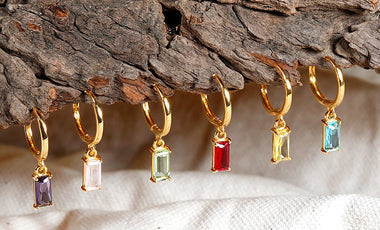
Earring sizes play an important role in choosing jewelry that fits well and feels comfortable on your ears. Many shoppers feel confused when they notice numbers such as 20G or 18G in earring descriptions. This guide explains what gauge earrings are, how the gauge system works, and which size is best for standard ear piercings.
What Are Earring Gauges and Why They Matter
Earring gauges refer to the thickness of the post or wire that goes through the ear piercing. The gauge system works opposite to what most people expect. A smaller number means a thicker post, while a larger number means a thinner post.
Knowing what earrings are gauges helps avoid discomfort, stretching, or loose-fitting earrings. Choosing the correct gauge ensures a smooth fit and keeps the piercing healthy.
What Gauge Are Normal Earrings?

Most earrings sold for everyday wear use a standard gauge size. If ears were pierced at a jewelry store or clinic, the size usually falls into this range.
Standard Earring Gauge Sizes
-
20 gauge (20G): Most common size for normal earrings
-
18 gauge (18G): Slightly thicker, often used for studs and hoops
When people ask what gauge are normal earrings, the answer is almost always 20G or 18G.
Read More: Where to Buy Earrings Online | Rarete Jewelry
What Size Gauge Is a Normal Earring?
A normal earring typically measures between 0.8 mm and 1.0 mm in thickness.
-
20G equals 0.8 mm
-
18G equals 1.0 mm
If the question is what size gauge is a normal earring, then 20G is the most widely used size for standard lobe piercings.
What Gauge Is a Normal Lobe Earring?
For traditional ear lobe piercings, comfort and ease of wear matter most. Jewelry brands design most studs, drops, and small hoops for this size.
The answer to what gauge is a normal lobe earring is 20 gauge, with 18 gauge also used for added durability.
Earring Gauge Chart Explained Simply
|
Gauge Size |
Millimeters |
Common Use |
|
22G |
0.6 mm |
Very thin fashion earrings |
|
20G |
0.8 mm |
Normal earrings, studs |
|
18G |
1.0 mm |
Studs, small hoops |
|
16G |
1.2 mm |
Cartilage, specialty jewelry |
|
14G |
1.6 mm |
Stretched piercings |
This chart makes it easier to understand what gauge earrings are before buying.
How to Choose the Right Earring Gauge
Choosing the correct gauge depends on piercing type, comfort, and jewelry style.

Consider Your Piercing Type
-
Lobe piercings work best with 20G or 18G
-
Cartilage piercings need thicker gauges
Match Jewelry Style
-
Stud earrings usually use 20G
-
Hoops and huggies often use 18G
Also Read: Stud Earrings for Women: Where to Buy Them?
Comfort Comes First
Wearing a thicker gauge than the piercing can cause pressure. Wearing a thinner gauge may cause slipping. Matching the original piercing size prevents issues.
Can You Wear Different Gauge Earrings?
Switching between 20G and 18G works for many people, but sudden changes can feel tight at first. Wearing much thinner earrings for long periods may cause the hole to loosen.
Understanding what gauge are normal earrings helps avoid these problems.
Common Earring Gauge Mistakes to Avoid
-
Buying thicker earrings without checking piercing size
-
Using very thin earrings daily
-
Forcing jewelry through a tight piercing
-
Ignoring gauge details in product descriptions
Avoiding these mistakes keeps ears comfortable and jewelry secure.
Final Thoughts on Earring Gauge Sizes
Understanding what gauge earrings helps clear confusion while shopping for jewelry. Most people choose 20 gauge earrings because they offer comfort, stability, and ease for daily wear. Checking the gauge size before purchasing helps ensure a proper fit and a comfortable feel.