You just got your ears pierced, and you are already eyeing your next pair of earrings. We completely understand, but changing earrings too soon is one of the most common piercing mistakes, and it can lead to irritation, infection, or even a closed hole. This guide covers exactly how long to wait by piercing type, how to know when you are actually ready, how to change earrings safely for the first time, and what earrings to choose for newly healed piercings.
How long should you wait to change earrings after getting pierced?
For earlobe piercings, wait a minimum of 6–8 weeks before changing earrings. For cartilage piercings, helix, tragus, conch, and daith wait at least 3–6 months, and in many cases up to a full year. The outside of a piercing often looks healed before the inside actually is. Changing earrings too early disrupts the tissue that is still rebuilding under the skin surface, which can cause irritation, swelling, or infection.
The most important rule: go by the signs of healing, not just the calendar. Even if 8 weeks have passed, if your piercing still shows redness, tenderness, or discharge, it is not ready.
Explore More: How Do I Know If My Earring Is Infected?
Healing Time by Piercing Type

Different piercings heal at very different rates. Here is the complete breakdown:
Earlobe Piercing — 6 to 8 Weeks
Earlobe piercings are the fastest to heal because earlobes have a strong blood supply and soft, flexible tissue. Most people can safely change their earrings at the 6–8 week mark if all signs of healing are present. However, piercings are not fully mature until 3–6 months, so handle them gently even after the first change.
Helix (Upper Ear Cartilage) — 3 to 6 Months
Helix piercings go through cartilage, which has significantly less blood supply than soft tissue. This means healing is slower and more sensitive to disruption. Most piercers recommend waiting a minimum of 3 months before the first change, and up to 6 months for a complete, comfortable swap.
Tragus — 3 to 6 Months
The tragus is a small, thick piece of cartilage on the inner edge of the ear. It is one of the trickier cartilage piercings to heal because of its location and constant contact with headphones and hair. Wait at least 3–6 months and avoid anything that puts pressure on the area during healing.
Conch — 6 to 12 Months
Conch piercings sit in the thick cartilage in the center of the ear and take significantly longer to heal than outer cartilage piercings. Give this piercing a full 6–12 months before attempting a jewelry change.
Daith — 6 to 9 Months
Daith piercings sit in the innermost cartilage fold of the ear. Because of their location and the curved jewelry typically used, they require patience; most piercers recommend 6–9 months minimum before changing.
Industrial — 6 to 12 Months
An industrial piercing connects two separate holes through the upper cartilage with a single barbell. Because it involves two healing sites simultaneously, it takes longer, up to a full year in many cases. Do not attempt to change the jewelry yourself for this one. Visit a professional piercer for the first change.
Note from Rarete Jewelry: These are general timelines; individual healing varies. Some people heal faster, some slower. The safest approach is always to check with your piercer before making the first change, especially for cartilage piercings.
Signs Your Piercing Is Ready to Change
How do you know when it is safe to change your earrings after piercing?
Your piercing is ready to change when there is no pain or tenderness when you touch or move the earring, no redness or swelling around the hole, no discharge or crusting, and the skin around the piercing looks the same color as the surrounding skin. If all four of these are true and you have waited the minimum recommended time, you are ready.
Signs it is NOT ready: any lingering tenderness when touched, visible redness around the hole, yellow or white discharge, warmth around the piercing site, or itching that feels irritated rather than simply dry.
When in doubt, wait another two weeks and check again. Two extra weeks of patience is always better than two weeks of dealing with an irritated piercing.

How do you change earrings safely for the first time after a piercing?
Wash your hands thoroughly, clean the piercing and the new earrings with saline solution, gently and slowly remove the original earring, and insert the new one immediately. Do not leave the hole empty. Insert the new earring straight away to prevent the hole from beginning to close.
Here is the full process:
Step 1 — Wash your hands. Clean hands are non-negotiable. Bacteria from unwashed hands are one of the most common causes of piercing infections at the earring-change stage.
Step 2 — Clean the piercing area. Apply sterile saline solution around the piercing and gently clean away any dried crust. Do not use alcohol or hydrogen peroxide; these are too harsh for healing tissue.
Step 3 — Clean your new earrings. Wipe the posts and backs of your new earrings with saline solution or a jewelry cleaning wipe before insertion.
Step 4 — Remove the original earring slowly. Gently unscrew or unclip the back and slide the earring out. Do not pull or force it. If it feels resistant, apply a small amount of sterile saline and try again after a few minutes.
Step 5 — Insert the new earring immediately. Do not leave the hole empty, even for a few minutes. Fresh piercings can begin to narrow very quickly. Slide the new earring in gently and secure the back without overtightening.
Step 6 — Clean again after insertion. Apply saline around the new earring and pat dry with a clean paper towel. Cloth towels can harbor bacteria.
Know More: How to Take Off Flat Back Earrings Easily?

What are the best earrings to wear after a new piercing heals?
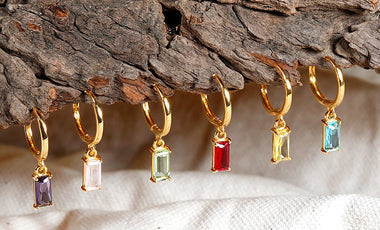
For your first earring change, choose small, lightweight studs or simple hoops made from hypoallergenic metals, such as titanium, surgical stainless steel (316L), solid gold (14k or 18k), or sterling silver. Avoid anything with nickel, heavy danglers, or costume jewelry with unknown metal content. The lighter and simpler the earring, the easier the transition on newly healed tissue.
Your first change is not the time for heavy statement earrings. Give the piercing a few more weeks of wearing lightweight, low-irritation styles before introducing anything heavy or elaborate. Freshwater pearl studs, small gold hoops, and simple gemstone studs are ideal first change choices, beautiful, lightweight, and gentle on newly healed ears.
What Happens If You Change Earrings Too Early?
Changing earrings before a piercing is fully healed is more serious than most people expect. Removing the original earring disrupts the thin layer of healing tissue forming inside the channel. This can cause the hole to close partially around the new earring, making insertion painful and difficult. It also introduces bacteria into a wound that is not yet fully sealed, significantly raising the risk of infection.
Signs you changed too early: the new earring is difficult to insert, the area becomes red and warm after the change, you notice new swelling or tenderness, or there is fresh discharge after the change. If this happens, switch back to a hypoallergenic stud, clean thoroughly with saline solution, and give the piercing several more weeks before trying again.

Tips to Speed Up Piercing Healing
You cannot rush the biological healing process, but you can avoid the things that slow it down. Clean the piercing twice daily with sterile saline solution. Never touch the piercing with unwashed hands. Sleep on a clean pillowcase and consider a travel pillow to avoid direct pressure on the ear. Keep hair products, perfume, and makeup away from the piercing. Eat a balanced diet; healing requires nutrients, and a healthy body heals faster. Avoid swimming in pools or the ocean until the piercing is fully healed.